
From Clinician to Mentor
A Guided Framework for Mentors
Being a great clinician taught you how to support your clients.
This framework helps you learn how to develop other clinicians.
Stepping into a mentor role comes with a whole new set of skills. You are learning how to give meaningful feedback, navigate difficult conversations, build confidence without creating dependence, and teach the clinical reasoning that often feels automatic to you.
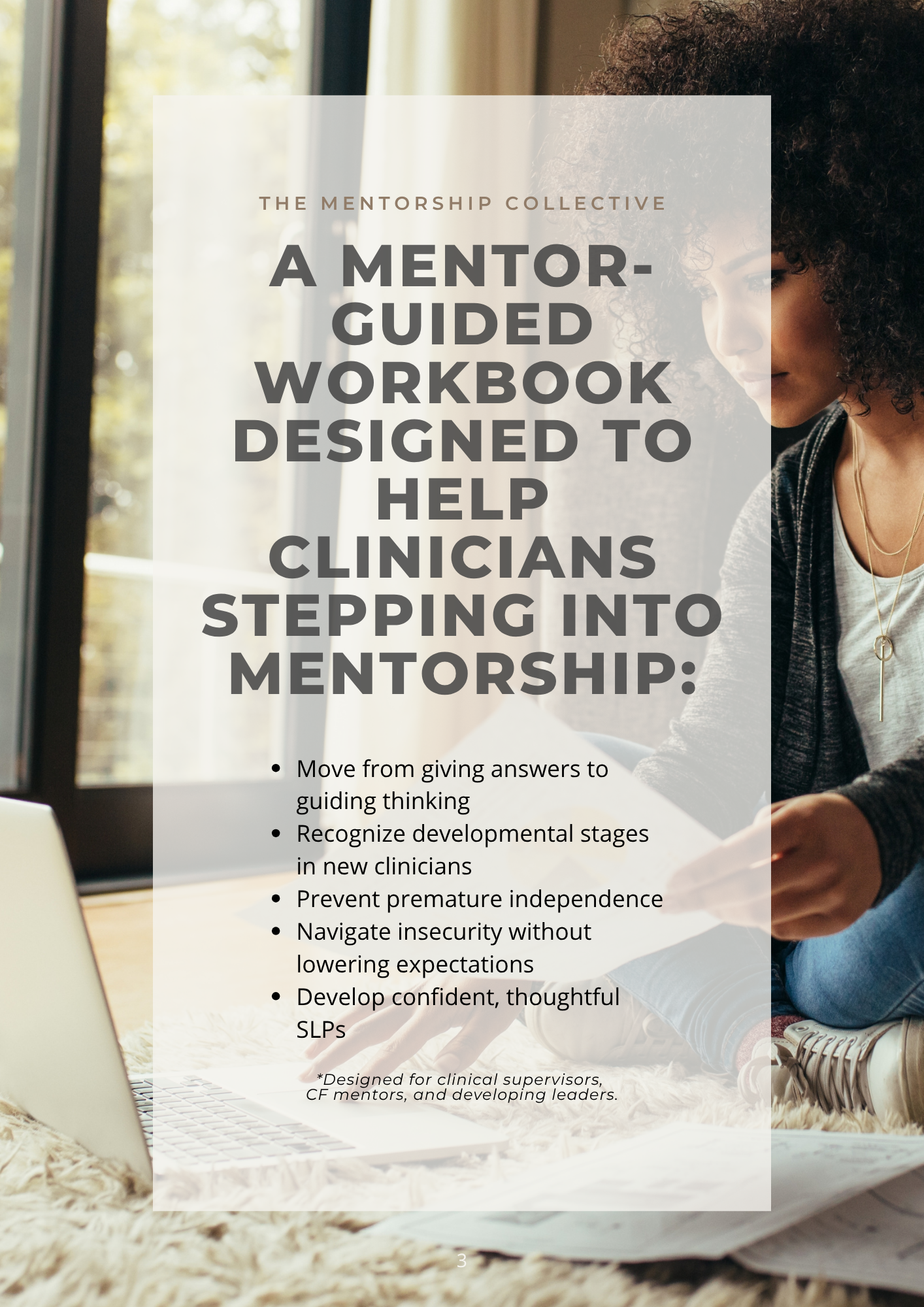
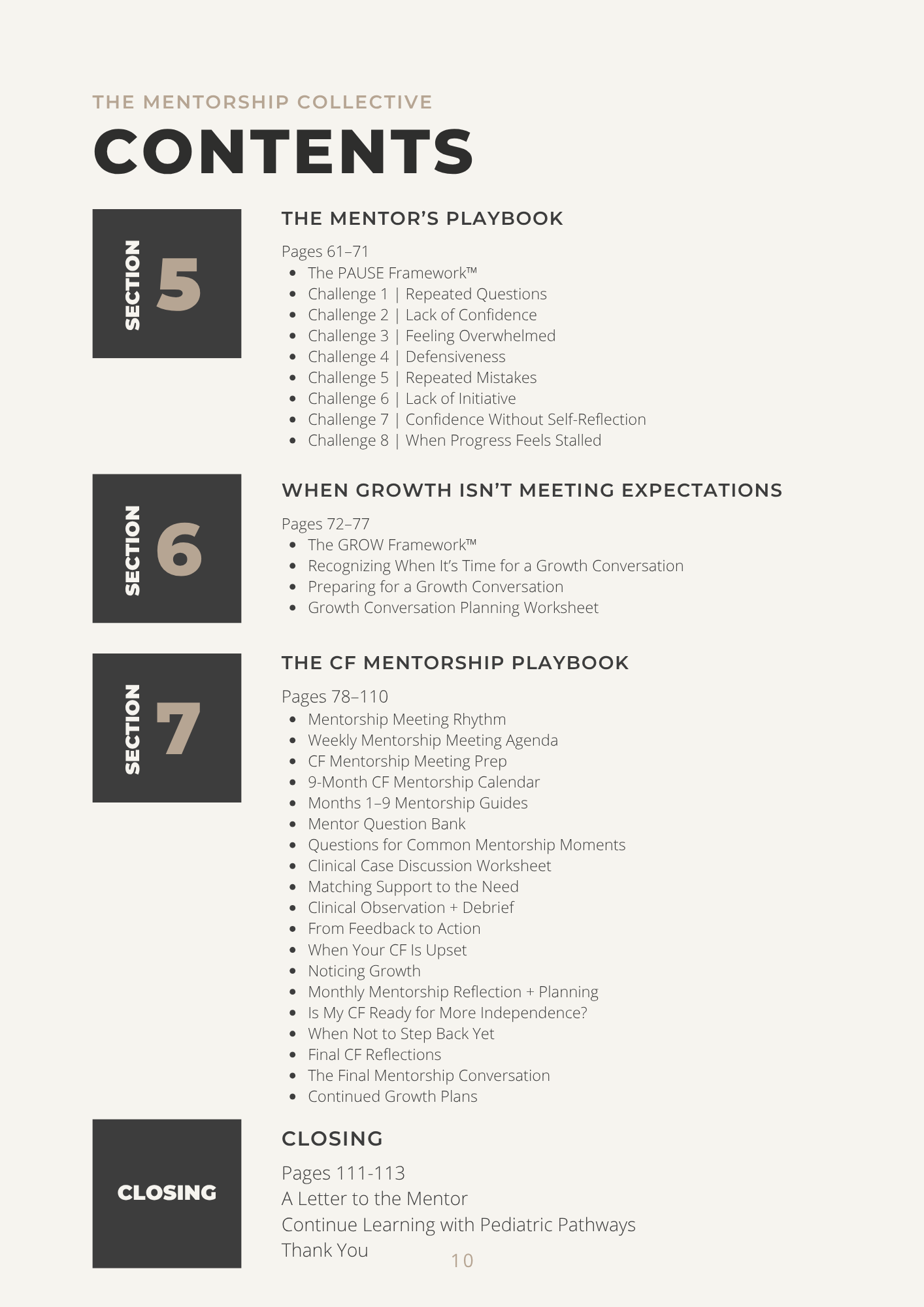
The Clinician to Mentor Workbook was designed to support that transition—with practical frameworks, reflection tools, conversation guides, and strategies you can actually use with the clinicians you mentor.
You do not need to have all the answers to be a great mentor.
You need the tools to help someone else learn how to find them.
Get Instant Access — $37 Digital Workbook

Best Sellers
Digital Workbook— $27
• Instant download
• Printable PDF format
• Accessible immediately after purchase
• Use on tablet, computer, or print at home

Bundle — $65
Instant digital download (From Clinician to Mentor Workbook PDF)
2- hour On-Demand PDH Mentor/Supervision Training
Clinical Thinking Development
❋
Structured Mentorship
❋
Confidence Through Reflection
❋
Supporting New Speech-Language Pathologists
❋
Designed for Real-World Practice
❋
Clinical Thinking Development ❋ Structured Mentorship ❋ Confidence Through Reflection ❋ Supporting New Speech-Language Pathologists ❋ Designed for Real-World Practice ❋
This Workbook Helps You move from an experienced clinician to a skilled Mentor.
What will I gain from this workbook?
Clinical experience teaches you how to be a strong clinician. Mentoring requires a different set of skills.
Suddenly, you’re not just responsible for your own clinical decisions—you’re helping someone else learn how to make theirs.
From Clinician to Mentor gives you practical frameworks, tools, and strategies to help you:
• Give clear, meaningful feedback that leads to growth
• Teach clinical reasoning instead of simply providing answers
• Ask questions that build reflection, problem-solving, and independent thinking
• Know when to teach, coach, challenge, or step back
• Build confidence without creating dependence
• Navigate overwhelm, defensiveness, repeated mistakes, and other common mentorship challenges
• Approach difficult and growth-focused conversations with clarity and confidence
• Recognize when a clinician needs more support, greater independence, or increased accountability
• Strengthen your own communication, emotional intelligence, and leadership skills
• Create mentorship that evolves as your clinician grows
You don’t need to have all the answers to be a great mentor.
You need to know how to guide the thinking, support the growth, and gradually step back as another clinician learns to trust their own clinical judgment.
That’s the shift from experienced clinician to intentional mentor.
Frequently Asked Questions

-
Clinical experience teaches you how to be a strong clinician. Mentoring requires a different set of skills.
From Clinician to Mentor gives you the frameworks, tools, and practical strategies to help you:
• Understand how new clinicians develop across the first 9 months
• Teach clinical reasoning instead of simply providing answers
• Give clear, meaningful feedback that supports growth
• Ask questions that build reflection and independent thinking
• Know when to teach, when to coach, and when to step back
• Navigate difficult conversations with clarity and confidence
• Support confidence without creating dependence
• Recognize when normal development may require greater structure or accountability
• Strengthen your communication, emotional intelligence, and leadership skills
• Create mentorship that is intentional, individualized, and designed to build independenceThis is not about having all the answers.
It is about learning how to guide, challenge, and support another clinician as they develop the confidence and clinical thinking to find their own.
-
Strong supervision and mentorship require more than clinical expertise. They require learning how to develop another clinician.
This workbook provides practical frameworks and tools that help you:
• Recognize where a clinician is in their development
• Adjust your support as their skills and independence grow
• Teach clinical thinking instead of simply giving answers
• Ask questions that strengthen reflection and problem-solving
• Give feedback that is clear, supportive, and actionable
• Navigate difficult conversations with curiosity and accountability
• Know when to teach, coach, challenge, or step backOver time, these skills help you move from simply supervising clinical work to intentionally developing confident, reflective, and independent clinicians.
-
From Clinician to Mentor is designed for SLPs who supervise, mentor, or support developing clinicians—including CF mentors, clinical supervisors, team leads, and clinicians stepping into leadership roles.
Whether you are mentoring for the first time or want more structure in a role you’ve held for years, this workbook gives you practical tools to make mentorship more intentional, consistent, and developmentally appropriate.
-
No. You do not need to already feel like an expert mentor.
The workbook walks you through the skills behind effective mentorship—from understanding clinician development and teaching clinical reasoning to giving feedback, navigating difficult conversations, and gradually building independence.
It can support both new mentors and experienced supervisors looking for a more structured approach.
-
Many supervision resources focus on what needs to be completed. This workbook focuses on how to develop the person you're supervising.
You'll learn how to recognize where a clinician is developmentally, make your own clinical thinking visible, ask better questions, adjust your level of support, navigate emotional or challenging moments, and intentionally move clinicians toward greater independence.
It's not just about overseeing clinical work. It's about developing clinical thinkers.
-
This workbook will give you practical tools and frameworks for coaching therapists. This workbook was designed to be used—not just read.
Throughout the workbook, you'll find:
• Conversation prompts and scripts
• Reflection questions
• Clinical reasoning frameworks
• Developmental check-ins
• Feedback strategies
• Growth conversation tools
• Mentor self-reflections
• Planning templates and worksheetsThe goal is to give you something to return to throughout the mentorship relationship—not something you read once and put away.
-
Yes. Mentorship doesn't always follow a script.
The workbook addresses common challenges such as repeated questions, low confidence, overwhelm, defensiveness, repeated mistakes, limited initiative, overconfidence, and concerns about progress.
You'll learn how to pause, assess what's actually happening, respond intentionally, and balance support with accountability.
-
One of the hardest parts of mentorship is knowing how much support to provide.
The workbook helps you recognize when a clinician needs direct teaching, when they are ready to be coached through their thinking, and when it's time to step back and allow more independent problem-solving.
As the clinician develops, your role should develop too.
-
You can choose the format that works best for you:
Digital Workbook — $37
• Instant download
• Printable PDF
• Accessible immediately
• Use on tablet, computer, or print at home -
This workbook was created by The Mentorship Collective™, founded by Speech-Language Pathologists dedicated to supporting clinicians through structured mentorship and professional development.
It reflects real clinical mentorship experience and the developmental process clinicians move through as they build confidence, independence, and professional identity.
-
Yes. Many clinics use this workbook as part of their clinician onboarding process to support the development of CFs, New Grads, Early Carrer Clinicians + New Mentors or Supervisors. It supports skills such as:
• Clinical reasoning
• Documentation confidence
• Professional independence
• Mentorship communicationClinic licensing options are available for teams onboarding new clinicians.
-
Confidence develops through structured reflection, experience, and support.
This workbook provides the framework to help you:
• Understand your growth as a mentor
• Organize your clinical thinking
• Recognize your progress
• Develop trust in your decision-makingYou do not need to feel confident to begin. Confidence develops as you continue to learn, reflect, and grow.
The Mentorship Collective™
Structured mentorship. Sustainable clinicians.